Low-Profile Over-the-Range Microwaves for Small Kitchens: Fit, Venting & Buying Guide
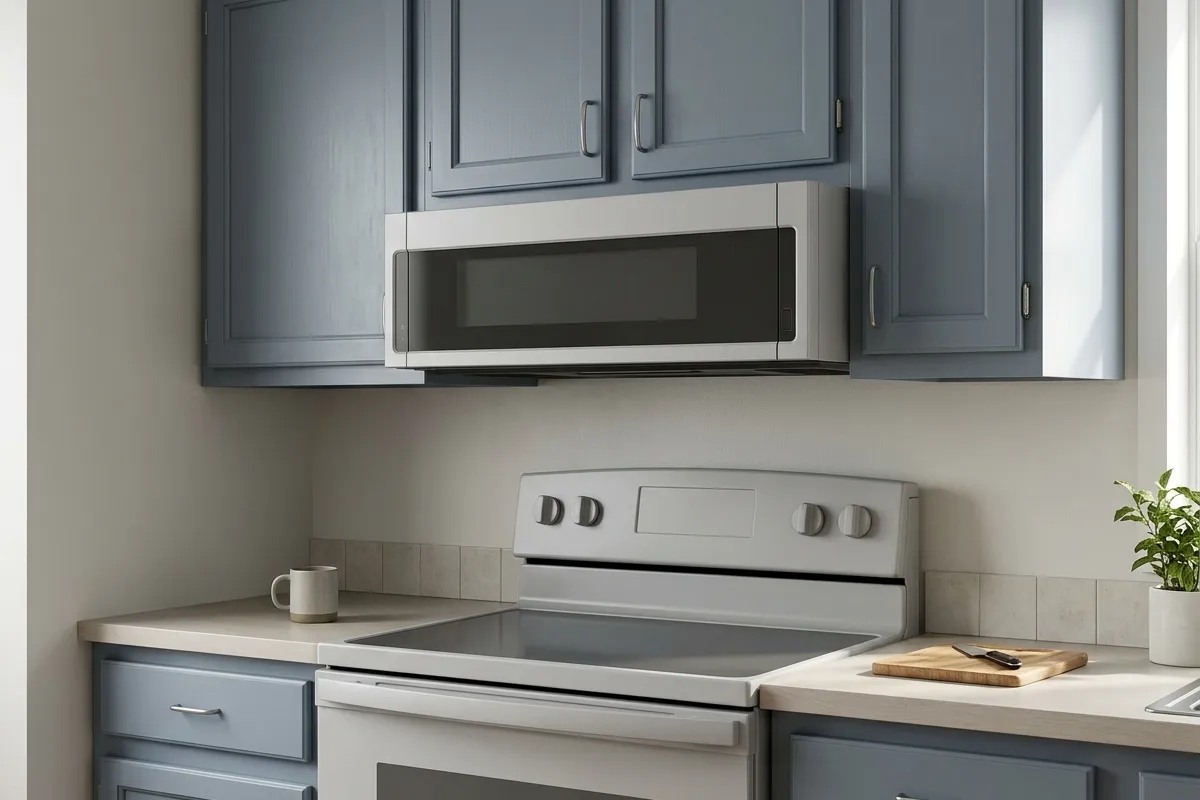
A low-profile over-the-range microwave can free countertop space in a small kitchen, but its shorter body solves only part of the fit problem. “Low profile” mainly describes reduced height. It does not automatically mean shallow depth, a narrower cabinet opening or compatibility with the space above your range.
Start with the cabinet opening, the appliance's front projection and the proposed venting arrangement. Then check whether the interior holds the dishes you actually use.
Is a low-profile OTR microwave a good fit for a small kitchen?
It is worth considering when your countertop microwave occupies valuable preparation space and you have a suitable installation location above the cooking appliance. Over-the-range, often shortened to OTR, combines the microwave and cooktop ventilation functions in one appliance.
Would moving the microwave make room for a cutting board, or just clear an otherwise unused counter? Weigh that benefit against the installation work.
Also consider who will use it. Can each regular user reach the controls and comfortably lift their usual dish into and out of the proposed position? Check that question in a showroom or with an installer before choosing an overhead location.
For decisions across several appliances, start with how to choose appliances for a small kitchen.
What “low profile” actually means
Think of height, width and depth as separate measurements. A reduction in height does not promise a reduction in the other two. Whirlpool also distinguishes low-profile designs from flush-mount designs; those descriptions are not interchangeable. Whirlpool's low-profile microwave overview.
Use the product dimensions to understand the appliance body. Use the installation drawing to understand the opening and surrounding space it requires. A product's listed width alone cannot confirm that your cabinet opening works.
Keep the exact model identifier beside your notes, and use dimensions and installation drawings for that model.
Low-profile vs standard over-the-range microwave
This table compares formats, not guaranteed specifications. Whirlpool's microwave hood comparison also distinguishes low-profile and classic designs.
| Decision point | Low-profile OTR | Standard OTR |
|---|---|---|
| Height | A shorter body is the defining attraction | A taller body may need more vertical space |
| Width | Do not assume the shorter body is narrower | Compare the exact required opening with the low-profile candidate |
| Depth and projection | Can still extend beyond upper cabinets | Also needs a separate depth and projection check |
| Usable capacity | Check usable interior height and whether your tall dishes fit. | May offer more interior height or volume; verify the actual cavity |
| Countertop space | Moves the microwave function above the range | Provides the same countertop-space benefit |
| Ventilation role | Combines microwave and cooktop ventilation functions | Also combines those functions; the format alone does not establish performance |
Measure before you buy
Make a worksheet with three columns: your kitchen measurement, the exact model's requirement and any unresolved question. Label where each measurement starts and ends.
Cabinet opening and vertical space
Record the opening between the adjacent cabinets, the position of the upper cabinet underside and the cooking surface below. Note trim, uneven surfaces and anything that reduces the opening.
Final dimensions and clearances must come from the installation instructions for the exact microwave and the cooking appliance involved. Do not substitute the gap around an old appliance or a general buying guide. If the documents conflict or leave the proposed arrangement unclear, resolve that with the manufacturers and installer before ordering.
Body depth, projection and door movement
Record cabinet depth and the microwave's documented installed position. Check whether the published appliance depth includes the door and handle. Note the frontmost point when closed and the space needed to open it.
Check the model's permitted upper- and side-cabinet depths and whether the cabinet arrangement leaves required ventilation openings unobstructed. Confirm any specified mounting accessory before calculating front projection.
Check neighboring cabinet doors, projecting handles, nearby walls and the microwave door's swing. Include your standing position and the route a dish takes through the opening. For the surrounding room, use these checks for kitchen doors, drawers and everyday access.
Connections and mounting
Record the outlet location and any existing duct opening. Have the installer check the electrical requirements, cord routing, mounting support and proposed duct connection against the selected model's instructions. Do not assume the old bracket or existing connections can be reused.
Whirlpool's example document covers location, electrical supply, mounting and venting; its requirements do not automatically apply to other models. Whirlpool installation instructions, W11359127 Rev. A.
The depth problem people often miss
A short appliance can still project substantially beyond the upper cabinets. A side view reveals projection that a front-facing product photo may conceal.
Draw a side view using the selected model's installation drawing and your cabinet measurements. Mark the cabinet face, microwave front and handle, if present. Use that sketch to discuss the proposed position with the installer.
Standing at the range, would the front edge leave enough room for your head or interrupt your sightline to a pot? Would an adjacent cabinet door meet the microwave before it opens far enough to use?
These comfort and access checks do not establish safe installation clearance; the layout must still satisfy the appliance instructions. Make acceptable projection an explicit shortlist requirement.
Vented outside vs recirculating
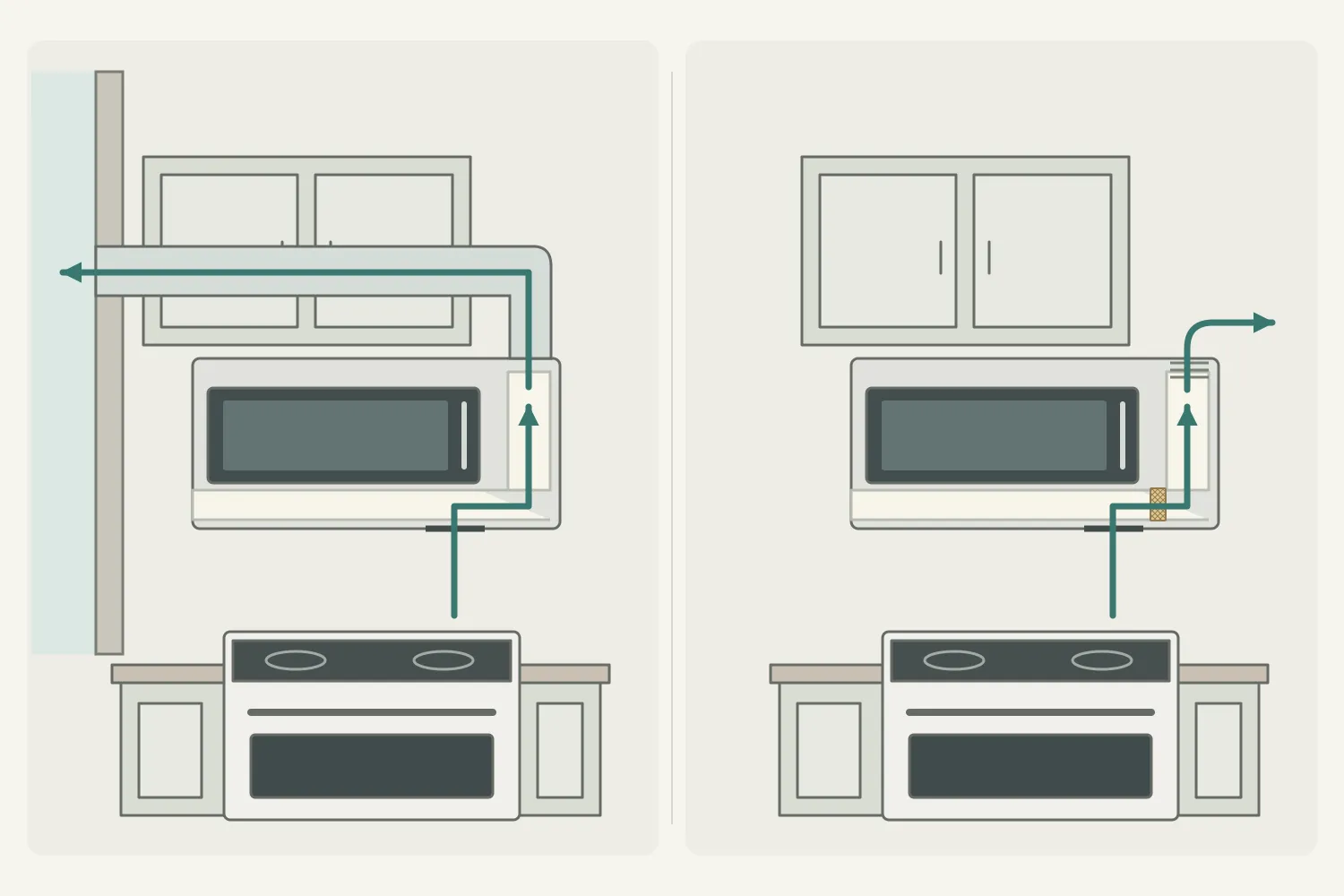
An externally vented arrangement sends captured air through ductwork to the outdoors. A recirculating arrangement filters air and returns it to the kitchen. Filtering some grease and odors is different from exhausting that air: recirculation does not carry cooking heat and moisture outside. Broan-NuTone's explanation of ducted and non-ducted ventilation.
Some low-profile microwaves support recirculation, with configuration and filters determined by the model's manual. Whirlpool's low-profile ventilation guidance.
Before choosing, confirm:
- Which venting arrangements the exact model supports.
- Whether the proposed duct route and connection meet its instructions.
- Which filters or conversion parts are needed and whether they are included.
- Whether the arrangement meets local requirements and the cooking appliance's instructions.
An existing opening above the range does not establish where a duct ends or whether it suits the replacement. Ask the installer to verify the route. Recirculation is not automatically permitted everywhere or suitable for every cooking setup.
How to think about ventilation capacity
CFM means cubic feet per minute: a measure of airflow. It helps describe ventilation capacity, but a headline rating alone does not tell you how well a particular installation will handle your cooking. Whirlpool's ventilation guidance also identifies duct length and cooking-appliance pairing as considerations. Whirlpool's range hood venting guide.
Do not choose a universal minimum CFM based only on the kitchen being small. Bring the cooking appliance's details, your cooking habits and the proposed vent route to the installer. Describe whether you mainly warm soup or frequently fry and sear, rather than asking only for the largest advertised number.
For each candidate, record what the airflow rating describes, fan settings, documented sound information and filter maintenance. Mark missing information as unknown.
Capacity and cooking power
Exterior size and usable cooking space are different checks. KitchenAid's buying guidance distinguishes the dimensions needed to place the appliance from the interior dimensions used for cooking. KitchenAid's microwave buying guide.
List the items you want to heat: perhaps a dinner plate, covered bowl, tall mug and casserole dish. Include lids and handles in their measurements. Ask whether each item fits through the opening and works in the manufacturer's permitted interior arrangement, including turntable movement where applicable.
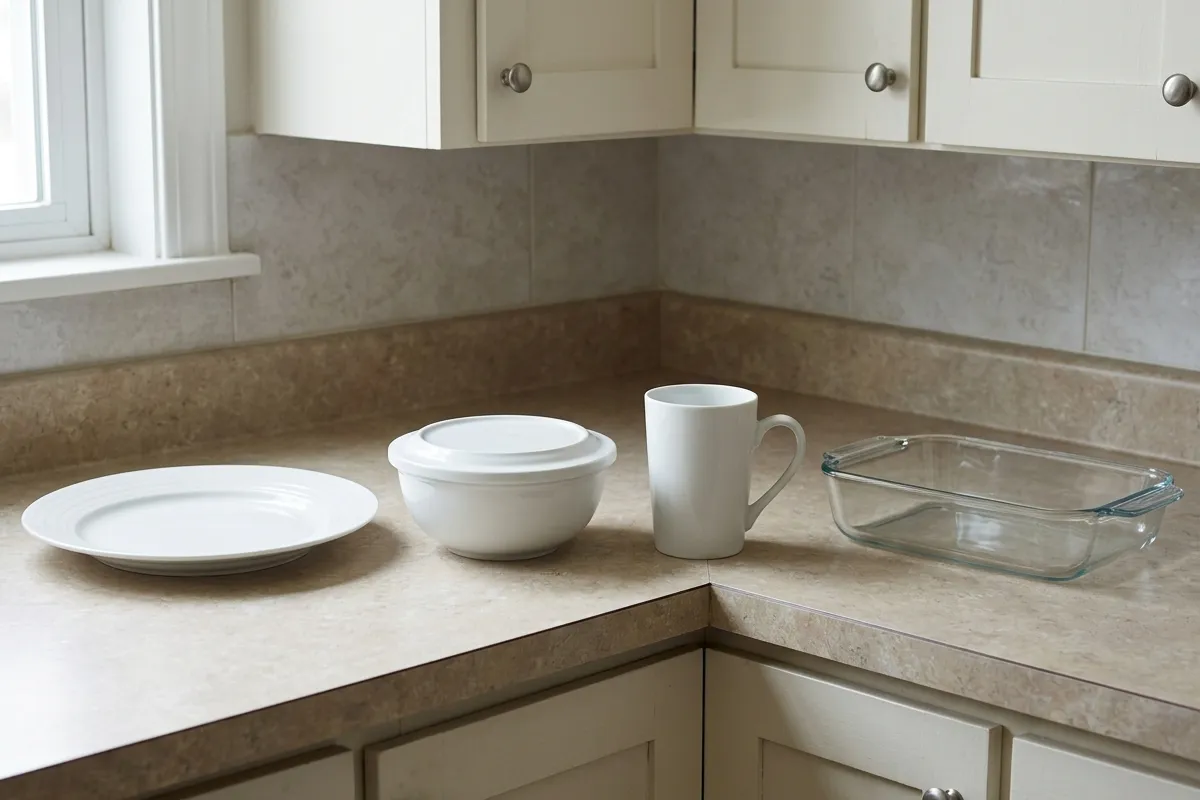
A cubic-foot capacity figure cannot answer every dish-fit question. A shorter cavity may be acceptable for your plates but inconvenient for a tall covered container.
Record the manufacturer's microwave cooking output separately from electrical installation requirements. Compare the listed microwave cooking output alongside the operating instructions for your usual tasks; do not use wattage alone to decide.
When a low-profile OTR microwave may not be the right choice
Consider another arrangement when:
- Your cabinets are very shallow. The proposed projection may be a poor match for the room even if the installation is otherwise permitted.
- The duct path is difficult. Establish the work involved before treating outdoor venting as an available option.
- You frequently cook with high heat or produce substantial smoke. If smoke handling is a priority, compare a dedicated hood with the microwave's ventilation arrangement using documentation for both and the cooking appliance.
- You rent. Confirm permission for mounting, cabinet changes and any electrical or duct work before purchasing.
- The layout creates conflicts. An awkward door swing or difficult overhead reach may outweigh the recovered counter space.
- Your existing countertop microwave already works well. Keeping it may preserve a useful arrangement without adding an installation project.
A dedicated hood also means finding a separate microwave location if you still need one.
Low-profile OTR vs countertop microwave
A countertop microwave lets you choose its location separately from the range hood. Compare its operating footprint with the space an OTR would recover.
For the countertop option, draw its operating footprint, including the manufacturer's required surrounding space and room to open the door. Then identify where food preparation would happen. For the OTR option, identify the counter area you would recover and check reach, projection and access above the range.
Do not count a storage shelf as an operating location unless the appliance instructions permit that setup.
Small-kitchen buying checklist
Before ordering, collect these answers on one sheet:
- Exact model identifier and matching installation and operating documents.
- Cabinet opening and vertical relationship to the cooking appliance checked.
- Microwave and cooking-appliance requirements reconciled.
- Installed depth, front projection and door movement checked against the room.
- Everyday users can reach the controls and handle their usual dishes.
- Interior fit checked for dishes, lids and handles.
- Outlet, mounting support and any required changes assessed by the installer.
- Venting arrangement, duct route where applicable and local requirements confirmed.
- Necessary filters, accessories and maintenance understood.
- Itemized purchase and installation scope, including removal and any cabinet work.
- Delivery and return terms checked before relying on a trial fit.
FAQ
Are low-profile microwaves the same width as standard OTR microwaves?
They can be, but low profile describes height rather than a universal width. Compare each model's body dimensions and required cabinet opening. Matching widths do not prove that the rest of the installation is compatible.
Do low-profile microwaves stick out past cabinets?
They can. Check installed depth, the door and any handle against your own cabinet fronts. A short body does not promise a flush front, and door-opening space needs a separate check.
Can a low-profile microwave recirculate air?
Some models can when configured with the specified filters and parts. Confirm the exact model's instructions and whether the arrangement is appropriate and permitted for your installation. Recirculation returns filtered air to the room rather than exhausting it outdoors.
Is a low-profile microwave good for a small kitchen?
It can be useful when reclaiming counter space matters and the overhead location works for fit, ventilation and everyday use. It is less compelling when projection, reach or installation changes create a new problem.
What should I measure before ordering one?
Measure the cabinet opening, vertical space relative to the cooking appliance, cabinet depth and proposed front projection. Check the microwave door and neighboring doors, and record outlet and duct locations. Compare these observations with the exact appliance documents before ordering.