No-Renovation Small Kitchen Improvements: Work With What You Have
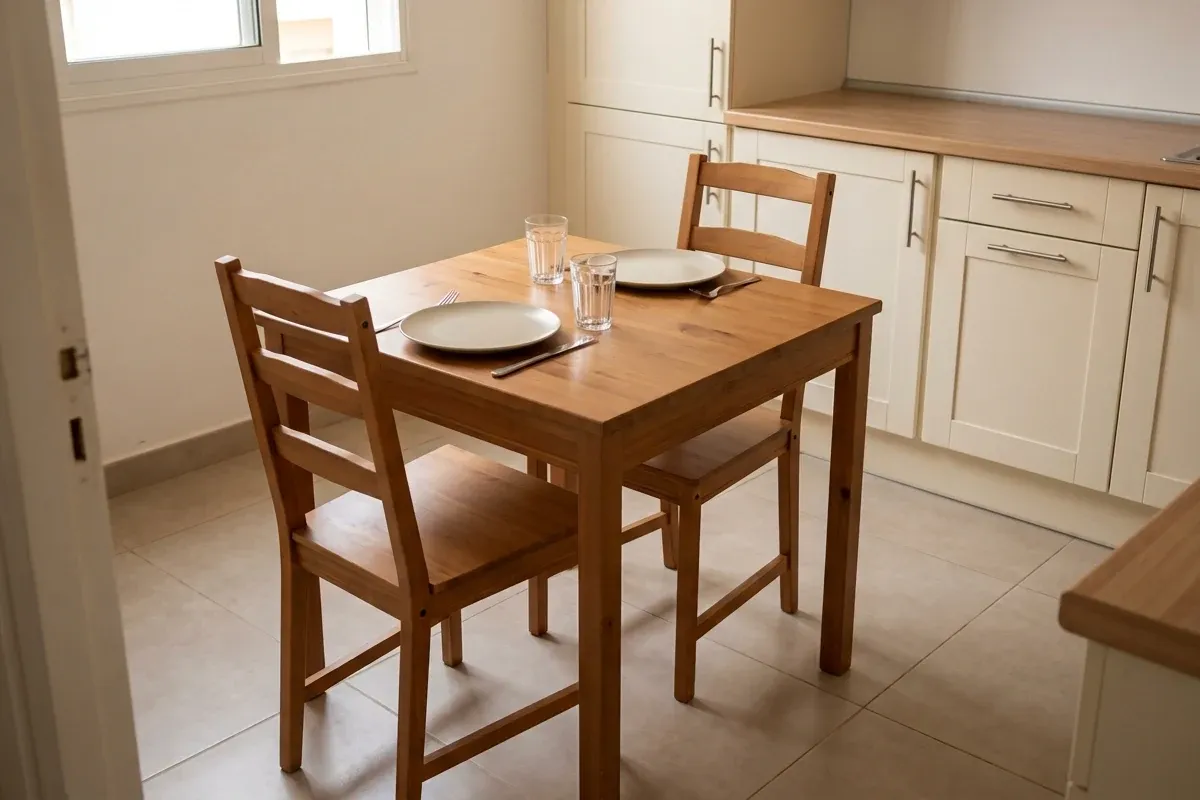
A kitchen can feel awkward even when everything has a home. Perhaps the table is needed for two activities at once, or setting out everything for a task leaves you with nowhere to work.
Before changing the room, try changing how you use it. The options below concern when an existing space is used, what a task needs at that moment, and which activities you choose to do there. They do not involve moving installed equipment, altering fittings, or making repairs.
Give a shared surface different jobs at different times
Consider a kitchen table that serves for homework and meals. Instead of trying to accommodate both at once, choose a handover point: when homework finishes, when the materials will be put away, and when setting the table can begin.
Make the handover practical. A school project that needs to stay spread out is different from a closed notebook. If the first activity cannot finish, decide whether the second can wait or whether another existing, appropriate place is available.
You are changing the schedule for the surface, not adding another piece of furniture. Keep the arrangement only if it suits the people using it.
Set out what the current step needs
For a task such as setting the table, compare laying out every item on a kitchen counter first with taking the items directly from their existing homes to the table. If an intermediate staging step serves no purpose for you, try leaving it out.
For a different activity, staging may be useful. When planning a grocery list, for example, you might want your notes together while you write. The question is whether the setup supports the task or occupies a surface you need for something else.
Keep this experiment to ordinary belongings and non-technical tasks. It is not guidance on food preparation, appliance operation, or where equipment can be used.
Move a task, rather than redesigning the kitchen
Some activities associated with the kitchen do not necessarily need to happen in it. You could write a menu or grocery list at an existing desk, then bring the finished list back when needed. That choice may suit a household whose kitchen table is already in use.
Check the tradeoff before adopting it. Would you have the information you need elsewhere? Would you interrupt another person's work? Does the activity actually need to remain near the kitchen?
This differs from moving an unresolved pile into another room: choose a place to carry out a defined activity, and respect that place's other uses.
Change the task you are asking the room to support
Suppose you want to lay out several serving dishes for a gathering but also need the table for seating. Before deciding that the kitchen needs more furniture, reconsider the plan for the gathering. Could you use a simpler table arrangement, or handle the table setup before guests arrive?
These are choices about the occasion, not a universal way to entertain. Keep any food-service or storage decisions separate from this exercise; their requirements are not established by an available patch of table.
If the activities you want still cannot coexist, tradeoffs in a very small kitchen deserve a closer look.
Compare one change with your current approach
Choose one of the adjustments above and describe the difference clearly. For example, this hypothetical comparison concerns a shared table:
| Question | Current approach | Alternative to try |
|---|---|---|
| What competes for the space? | Homework materials and table setting overlap. | Agree when homework materials will be put away before table setting starts. |
| What remains unchanged? | The table, seating, and storage locations. | The same table, seating, and storage locations. |
| What would make it unsuitable? | Record the difficulty you currently encounter. | Homework cannot finish at the proposed handover, or the arrangement disrupts someone else's routine. |
The example is a planning illustration, not a reported result. After trying your chosen change, note whether the conflict remained, disappeared, or shifted to another activity. Do not judge it only by whether the room looked tidier.
If the change depends on returning items to agreed homes, a repeatable organizing routine can support that part of the plan.
Recognize when the next step is a separate project
A change in how you use the room may not address the problem you care about. If an option depends on buying something or altering the kitchen, identify that dependency rather than treating it as part of this no-work experiment.
Use budget makeover priorities to decide whether that next commitment belongs in your plans.
In a rental, proposed alterations also raise permission and removal considerations.
For a specific purchase, fully costed upgrade options need their own checks.
You can finish with a different way of using the room, a clearly defined project to investigate, or the decision to keep your current approach. None requires turning this exercise into a renovation plan.