Small Kitchen Organization Ideas: Give Everyday Items a Useful Home
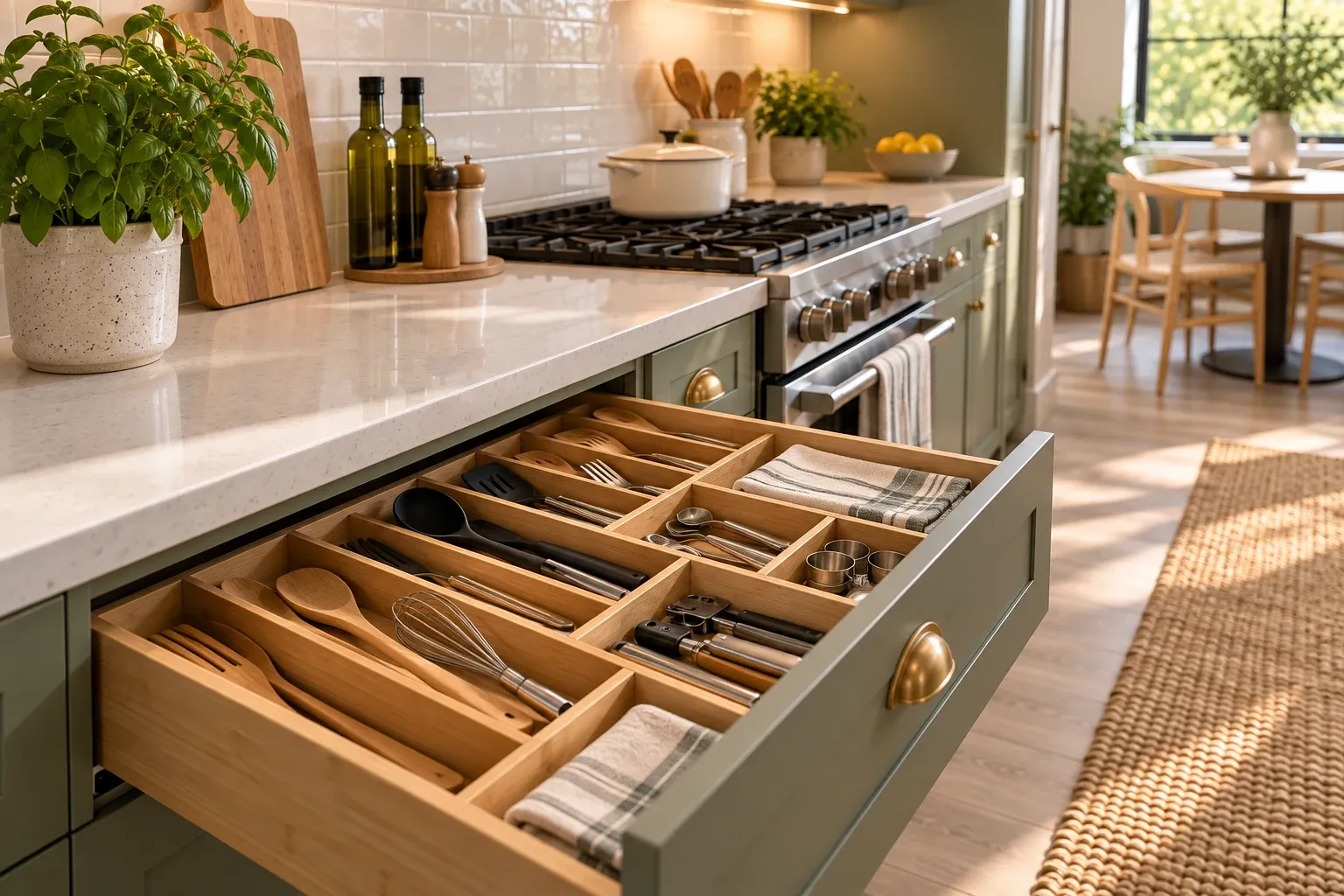
An assigned drawer is only part of an organizing plan. Think about what happens when you need an item, use it, and return it. Is its home obvious to everyone who uses the kitchen? Can you put it back without rearranging unrelated belongings?
Choose one familiar routine to examine, such as setting the table or putting clean utensils away. Work on that routine before deciding whether the whole kitchen needs reorganizing.
Notice where the routine breaks
During the activity, note what you search for, what you move aside, and what you leave out afterward. Keep these as observations rather than judging the kitchen as tidy or untidy.
For example, in a hypothetical shared kitchen, one person expects the measuring spoons in a utensil drawer while another puts them with baking tools. The first issue to resolve is which home they will both use. Buying a divider would not answer that question.
Use three prompts:
- Find: Where did I look first?
- Use: What unrelated item did I have to move?
- Return: What made putting this away awkward or unclear?
You do not need to time the routine or give it a score. Identify the step you want to change.
Agree on a home before adding a label
Some households may prefer measuring tools together; others may organize around the activities they use them for. Select one approach for the items in question and explain it to anyone affected.
A simple written list can record the agreement without attaching anything to a drawer or cabinet. A label is optional, and it cannot resolve a location that still feels impractical.
If you have not yet assigned space across the room, planning storage locations is the earlier task.
Give putting things back as much attention as taking them out
Consider the return step while choosing the arrangement. A place that seems acceptable when you take one item out may still be awkward when several belongings need to go back.
Notice whether unrelated belongings have taken the space needed to put the item back.
For ordinary belongings, consider grouping related items or choosing a different already-available home. If the issue concerns the cabinet opening or a proposed organizer, leave that fit question for cabinet storage and access checks.
Do not treat an organizing routine as a reason to alter fittings or move installed equipment.
Choose a reset that belongs to your day
Pick a moment when checking the chosen area's contents would make sense to you: after putting clean utensils away, before setting the table, or when finishing another familiar activity.
Keep the check specific. Instead of “organize the kitchen,” it might be “return the table-setting items to their agreed drawer.” Include only the belongings involved in that routine.
If something repeatedly lands elsewhere, note where it ends up and ask the person using it why. Use that observation when reconsidering its home.
For changes outside daily organizing habits, consider improving the kitchen without renovation as a separate task.
Keep a find-use-return record
Use one row per item or group. Record what actually happened rather than the result you hoped for.
| Item or group | Agreed home | Find: where did I look? | Use: what got in the way? | Return: what was awkward? | Next adjustment |
|---|---|---|---|---|---|
| Name the item or group. | Record its agreed home. | Note where you looked first. | Describe what got in the way. | Describe what made returning it awkward. | Choose the next adjustment. |
| Name the item or group. | Record its agreed home. | Note where you looked first. | Describe what got in the way. | Describe what made returning it awkward. | Choose the next adjustment. |
When you next use the routine, compare it with your notes. What changed during finding, using, and returning the items? Keep an arrangement because it suits your household, and revise it when your observations suggest otherwise.