Small Kitchen Storage Ideas for Cabinets, Counters, and Pantry Space
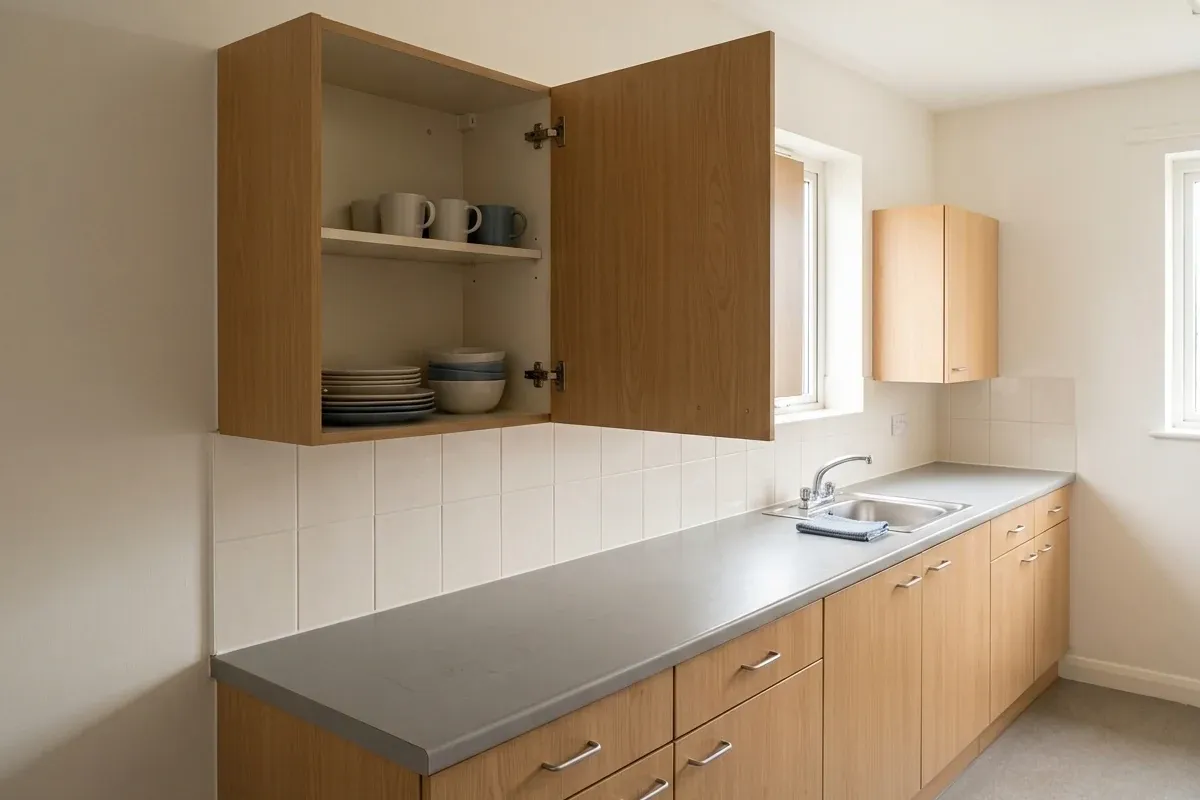
A kitchen storage plan needs destinations for your belongings. Before adding a shelf, basket, or cart to a shopping list, decide what needs a home and which existing space you would like to give it.
Work across the room on paper first. That lets you consider an exchange between two locations without emptying every cabinet or treating each crowded spot as a separate purchase.
List the groups that need a home
Write down the possessions you are trying to accommodate: everyday dishes, cooking tools, serving pieces, food packages, or items that arrived from another room. Keep the groups recognizable to you. There is no need to inventory every fork.
Alongside each group, note how you use it. Everyday lunch containers may deserve a different location from holiday serving pieces. Your categories should reflect your household, including anyone who shares the kitchen.
If the main problem is still unclear, begin with a practical starting plan for the kitchen before reallocating its contents.
Give the counter a deliberate role
Choose which possessions you actually want to keep on the counter and why. Consider the difference between something you use there and something that landed there because it had no destination.
For example, a stack of paperwork could have a home outside the kitchen. A dish used for a daily routine might belong in a cabinet you find easy to use. These are possibilities to compare with your own habits, not instructions to clear every surface.
Leave installed equipment out of this rearrangement exercise. For ordinary possessions you do plan to relocate, name the destination rather than writing “put away.”
| On the counter | Why it is there | Keep here or consider another home? |
|---|---|---|
| Name an item on the counter. | Explain why it is there. | Record whether to keep it here or name another home. |
| Name an item on the counter. | Explain why it is there. | Record whether to keep it here or name another home. |
Assign jobs to existing cabinets and drawers
Give each usable storage area a provisional purpose. You might group meal dishes in one area and serving pieces in another, or keep the tools for a particular activity together. Compare those choices with how you retrieve things, not with a photograph of someone else's kitchen.
Keep each assignment provisional while checking fit and comfortable access. Revise the map if a candidate location does not work.
Consider a hypothetical plan with lunch containers on the counter, spare mugs in a preferred cabinet, and serving pieces in another. One option is to give the lunch containers the preferred location and check whether the mugs can share the serving-piece area. Another is to leave the mugs where they are and assess a different existing space for the containers. Compare both complete arrangements, including access to the serving pieces, before making the exchange.
Use cabinet storage and usable-space checks to confirm or revise those candidate locations.
If a cabinet itself is the concern, separate that question from rearranging its contents. Cabinet access and upgrade options call for a different assessment.
Account for pantry space without scattering the problem
On your plan, identify where food packages currently belong and where they overflow. Is the issue that you cannot see what you already have, or that the space assigned to those packages is inadequate for what you keep?
Avoid choosing an extra cabinet or cart until you have defined that need. A candidate space still needs a suitability check; this planning exercise does not determine appropriate food-storage conditions.
If you have no separate pantry, planning a pantry substitute is the more focused next task.
Resolve destinations before choosing storage products
Check the completed map for any belongings left without a destination. Resolve those gaps before treating an arrangement as ready to try.
If you rent, separate arrangements using existing space from proposed additions or alterations. Rental upgrade constraints need their own check before you commit to a change.
Only then describe any remaining storage purchase by the job it would need to do. Do not settle on a product based on appearance alone. Questions about fit, mounting, materials, and suitability need answers for the particular option.
When a purchase becomes relevant, comparing fully costed small upgrades is a separate decision from assigning space.
Make a storage allocation map
Use a separate row for each group. Keep uncertain locations marked as candidates so the map does not look more settled than it is.
| Belongings | Current home | Proposed home | What would be displaced? | Check still needed |
|---|---|---|---|---|
| Name the belongings. | Record their current home. | Identify a proposed home. | Name what would be displaced. | Record the check still needed. |
| Name the belongings. | Record their current home. | Identify a proposed home. | Name what would be displaced. | Record the check still needed. |
| Name the belongings. | Record their current home. | Identify a proposed home. | Name what would be displaced. | Record the check still needed. |
Choose one completed exchange to consider first. After using the arrangement, note whether you could retrieve and return what you needed, and whether you created a problem elsewhere. Treat the answer as a reason to keep or revise that particular arrangement, not a verdict on the whole kitchen.
Once the locations make sense, everyday organization routines can address how belongings get returned to them.