Tiny Kitchen Pantry Ideas When You Have No Separate Pantry
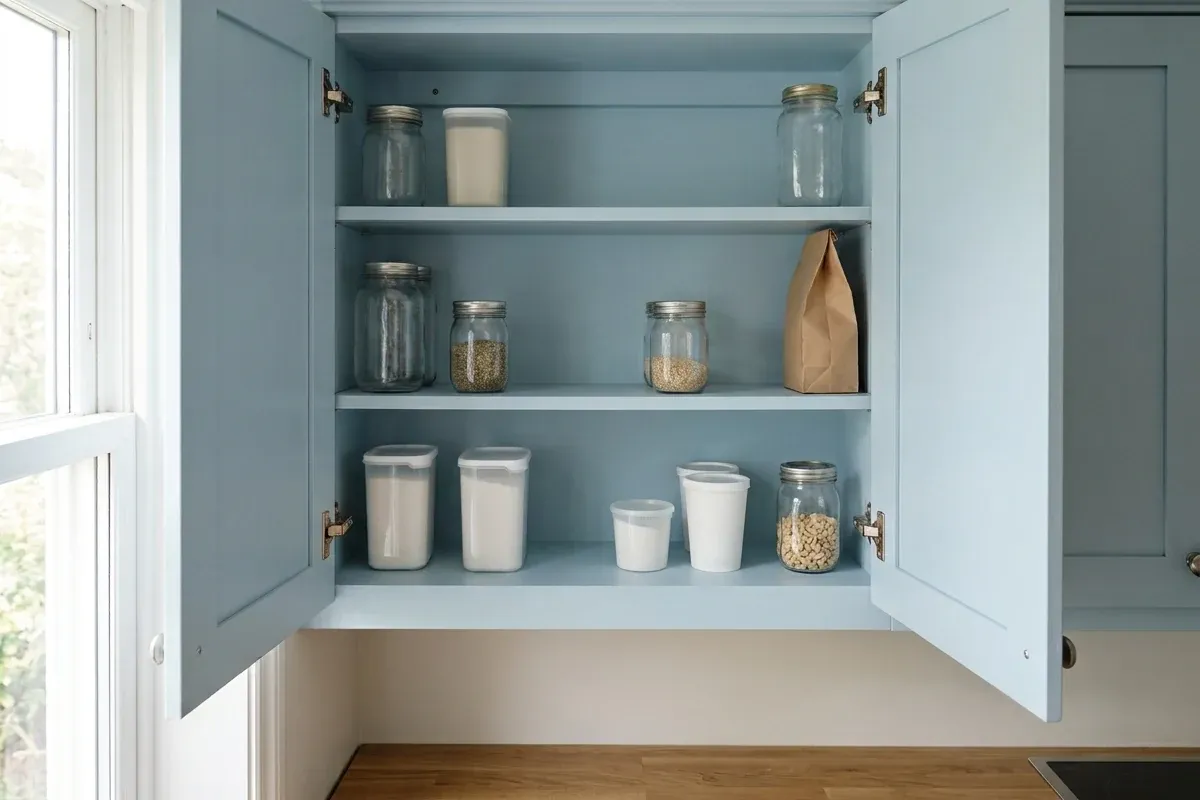
A pantry does not have to be a separate room. Start by assigning suitable existing storage to the shelf-stable food you actually use, then give each item a location you can find again. In a tiny kitchen, that may mean one food cupboard or a small everyday supply with a separate reserve elsewhere.
Choose the location before buying organizers. An empty space is useful only if its conditions suit the food and you can use the storage as intended.
Separate pantry food from food that needs refrigeration
Read the storage instructions on each package, including directions that apply after opening. A product's place in a grocery-store aisle is not a substitute for its label. FDA advises checking storage directions and promptly refrigerating foods that require it. FDA food-storage guidance.
Make the pantry inventory from foods whose labels permit cupboard storage in their current condition. Keep refrigerated and frozen items out of this exercise. If you are unsure how an opened product should be stored, resolve that question before assigning it a shelf.
Group the eligible items by the meals you make: breakfast supplies, pasta and sauces, or baking ingredients, for example. These are working categories, not a required shopping list. Record unopened duplicates separately so you can see what is already available.
Rule out unsuitable locations first
USDA recommends a cool, clean, dry place for canned and other shelf-stable foods. Its guidance excludes storage above the stove, under the sink, in damp garages or basements, and in temperature extremes. A space that happens to fit a package can still be the wrong pantry location. USDA Kitchen Companion, printed page 14.
Keep food away from household cleaning products and chemicals, as FDA advises. Do not turn a mixed cleaning cupboard into food storage simply by adding a food bin. FDA non-refrigerated storage guidance.
For each candidate, ask:
- Does it meet the food's storage directions during normal use of the kitchen?
- Is it exposed to heat, moisture or household chemicals?
- Can you reach and remove the packages without an awkward stack?
- Is the existing shelf or drawer appropriate for the intended contents under its own instructions and condition?
If the storage's support or capacity is uncertain, have that checked before loading it. This guide provides no load rating for an unknown cabinet.
Choose one of three pantry arrangements
The arrangements below are editorial options for existing storage that passes those checks. None establishes that a particular cupboard or room is suitable without assessment.
| Arrangement | When to consider it | How to make it usable |
|---|---|---|
| One dedicated food cupboard | Your current pantry inventory fits in an appropriate existing cupboard | Assign visible groups and keep a written note of anything stored behind another item |
| Everyday cupboard plus reserve | Duplicate packages crowd out the items you are using | Keep the active supply together and record each reserve item's separate suitable location |
| Food storage outside the kitchen | No suitable kitchen cupboard can be reassigned | Evaluate existing storage in an adjoining room against the same conditions and label it clearly as food storage |
Do not assume a hallway or dining-room cupboard passes because it is outside the kitchen. Apply the same heat, moisture, chemical and support checks. If no suitable location exists, reduce the proposed inventory or investigate a properly specified storage solution before purchasing extra food.
For the wider exchange of food, dishes and equipment between cupboards, use small kitchen storage ideas. For a cabinet whose contents are difficult to reach, continue to cabinet storage ideas based on usable space.
Make the reserve visible without bringing it all into the kitchen
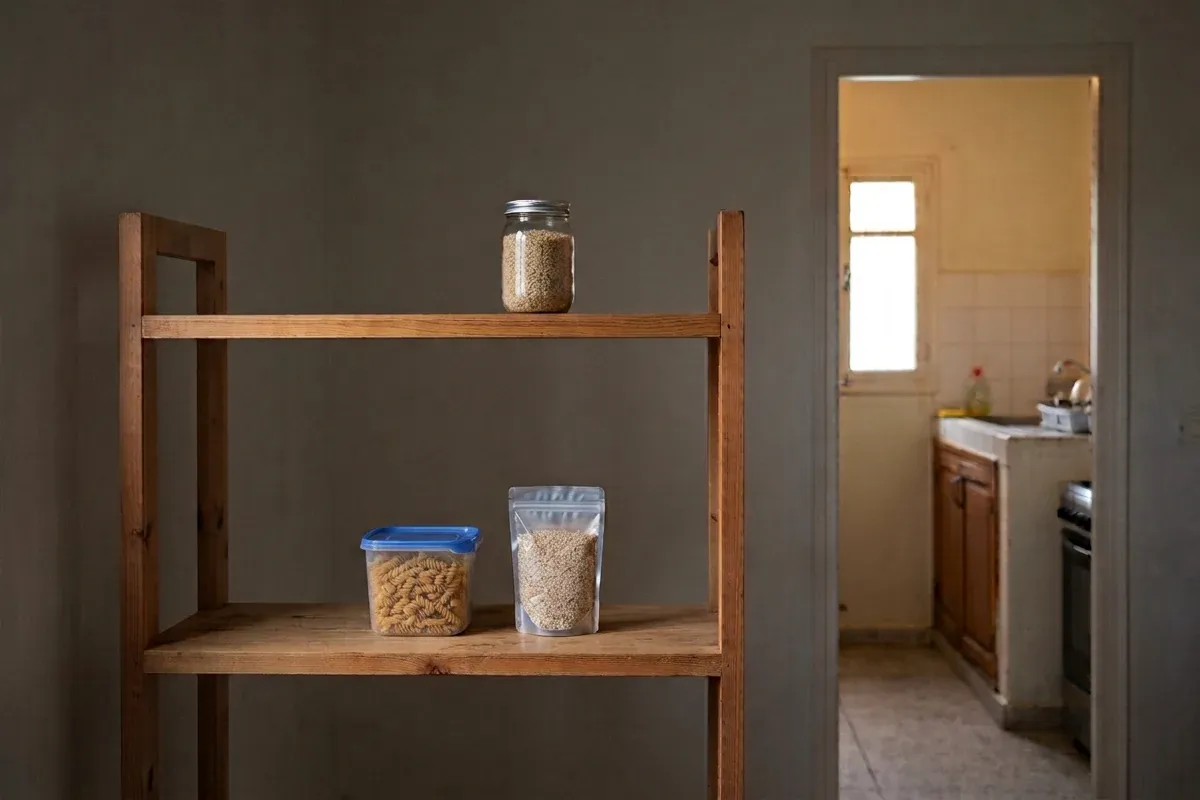
Suppose, as a hypothetical example, your breakfast ingredients and spare packages compete for one suitable cupboard. You could keep the current breakfast supply there and move unopened duplicates to another verified location. Write the reserve location on your inventory so the next shopping decision includes it.
If there is no suitable reserve location, the alternative is to reconsider how much you buy at once. That is a space decision, not a claim that smaller packages are cheaper. Consider your shopping access and household needs before changing quantities.
| Food group | Current package location | Reserve location, if any | What to check before buying more |
|---|---|---|---|
| Breakfast | Record the current package location. | Identify a suitable reserve location, if available. | Record what needs checking before buying more. |
| Main-meal ingredients | Record the current package location. | Identify a suitable reserve location, if available. | Record what needs checking before buying more. |
| Baking or occasional-use ingredients | Record the current package location. | Identify a suitable reserve location, if available. | Record what needs checking before buying more. |
Montana State University Extension advises placing older cans and packages in front for first use and storing opened foods such as pasta in dry, airtight containers. Follow the individual food's instructions; rotation does not make damaged or improperly stored food safe. MSU pantry guidance.
Keep storage directions and identifying package information with any food you transfer. Matching containers are optional; choose them only when they solve a specific packaging or retrieval problem. No container changes which foods require refrigeration.
Decide what the pantry displaces
Before committing a cupboard, name where its former contents will go. If the answer is the preparation counter, compare that tradeoff in deciding what deserves space in a very small kitchen.
If your plan instead calls for attaching an accessory or changing a rental surface, check renter-friendly upgrades and their removal limits before proceeding.
Finish by putting away the food already on your list and retrieving the ingredients for one planned meal. Note what is hidden, difficult to reach or missing from the location record. Adjust those assignments before adding more storage or more stock.