Budget Small Kitchen Makeover Ideas: Prioritize What Matters
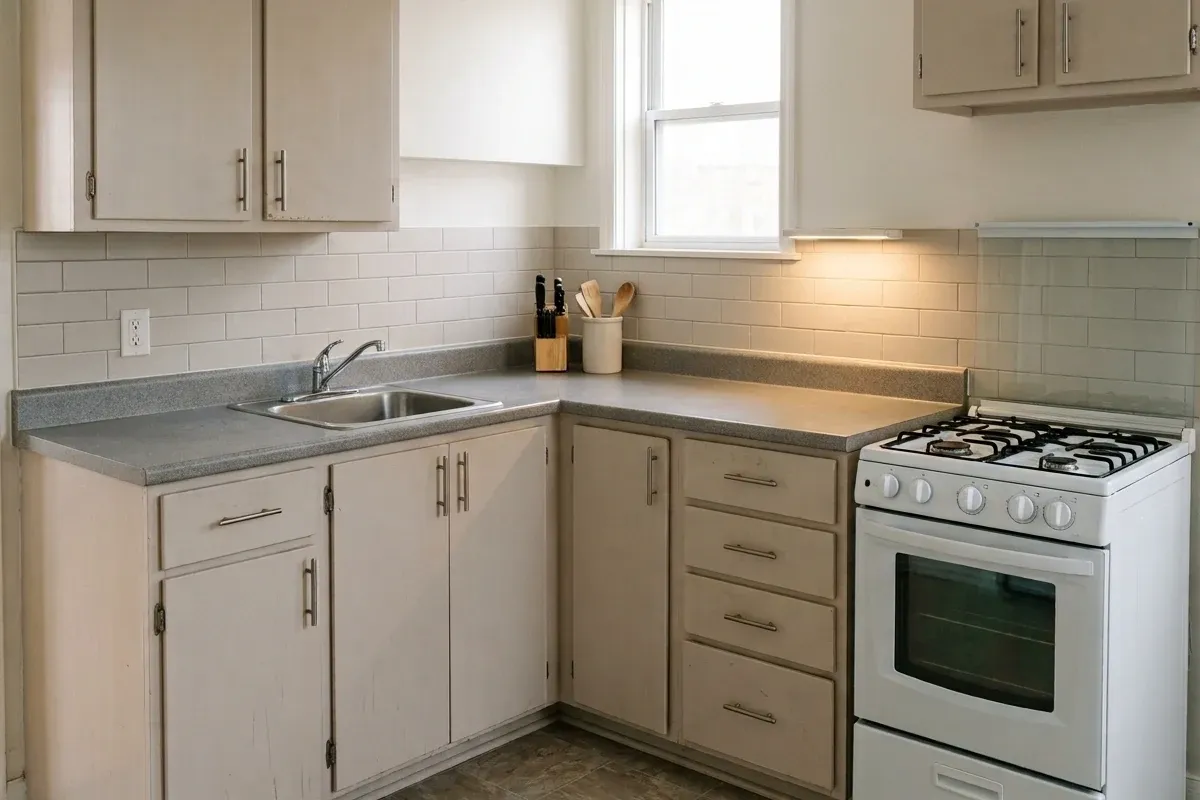
Before deciding what to buy for a small kitchen makeover, decide what would make the spending worthwhile. You may care most about a cabinet you dislike, a task that feels awkward, or an appliance you are considering. Give those wishes separate lines in your plan rather than treating them as one shopping list.
A useful budget plan connects each proposed change to a purpose, a defined scope, and a cost you have actually checked. Until those pieces are known, keep the idea provisional.
If your list is still a general dissatisfaction with the room, start with choosing the kitchen problem to address.
Build a shortlist with different levels of commitment
Choose a few ideas tied to your priorities. Include an option using existing belongings when one makes sense.
For a visual refresh, you might compare changing the arrangement of items on an existing display with buying something for that display. For a cabinet concern, compare living with its current appearance while you investigate options against making a change now. For an appliance wish, keep your current method on the list alongside the proposed purchase.
Compare the commitment each option involves without assuming that a larger project will suit you better.
Improvements without renovation can be a separate route when you want to work with the room as it is.
If you rent, record permission and removal questions for rental upgrades before treating any alteration as an available option.
Define what each option includes
Describe the finished scope in enough detail that you can check it. “Change the cabinet appearance” is an idea. A proposal that identifies what will change and what will remain gives you something to investigate.
Keep professional work, products, and your own tasks distinct in your notes. If you request a quote, ask what it includes, what it excludes, and what information is still needed to settle the scope. Record any missing information.
For cabinet decisions, research refreshing versus replacing cabinets before comparing totals for different kinds of work.
For an appliance, start with selection and fit requirements rather than treating the listed item price as a completed purchase plan.
Gather costs without disguising unknowns
For each candidate, check which of the following belongs in its scope:
- The item or work itself, including the quantity you need.
- Required tools, accessories, or consumables.
- Delivery, tax, installation, or removal charges, where applicable.
- Any preparation or related work identified in the documentation or quote.
These are questions to investigate, not a statement that every project has every charge. Mark an item “not applicable” only when you have established that it does not belong in the scope; otherwise leave it unknown.
Record where each figure came from and when you checked it. A quote for one scope and a product listing for another are not interchangeable estimates.
When you want a project with a defined spending ceiling, fully costed upgrade options require their own current checks.
Decide what deserves the available budget
Set the amount you are willing to commit, then compare only the options whose scope you understand. Keep unresolved projects in a separate list so an incomplete estimate does not quietly become your preferred option.
Ask four questions:
- Does this address a priority I actually named?
- What would I give up or postpone to choose it?
- Am I comfortable with its commitments and disruption?
- What evidence could still change my decision?
There is no need to divide your budget evenly across the kitchen. You can choose one supported change, postpone a larger project, or decide that the available options do not justify spending yet.
As a hypothetical example, suppose both a cabinet refresh and an additional appliance have defined scopes and checked totals within the amount you are willing to commit, but you do not want to fund both. If the cabinet appearance is your main concern and your current cooking method suits you, you might prioritize the refresh. If the appliance addresses the task you care about most and you are content with the cabinets, you might choose the appliance instead. Record which benefit you are choosing and what you are postponing; neither choice is a universal better value.
Keep a scope-and-cost worksheet
Use one copy per candidate. Record actual checked figures in your own notes; the prompts below do not supply estimates.
| Planning question | Your record |
|---|---|
| Desired result | Describe the result you want. |
| Exact proposed scope | Define the proposed work. |
| What stays unchanged? | Identify what you will retain. |
| Checked costs and their sources/dates | Record checked costs, sources, and dates. |
| Applicable extras still to verify | List extras that still need verification. |
| Permission, fit, or installation questions | Record unresolved permission, fit, or installation questions. |
| Amount I am willing to commit | State your spending limit. |
| Other change I would postpone | Name the change you would postpone. |
| Decision: proceed with planning, revise, or defer | Record whether to proceed, revise, or defer. |