Small Kitchen Faucet and Sink Upgrade Ideas: Check Compatibility First
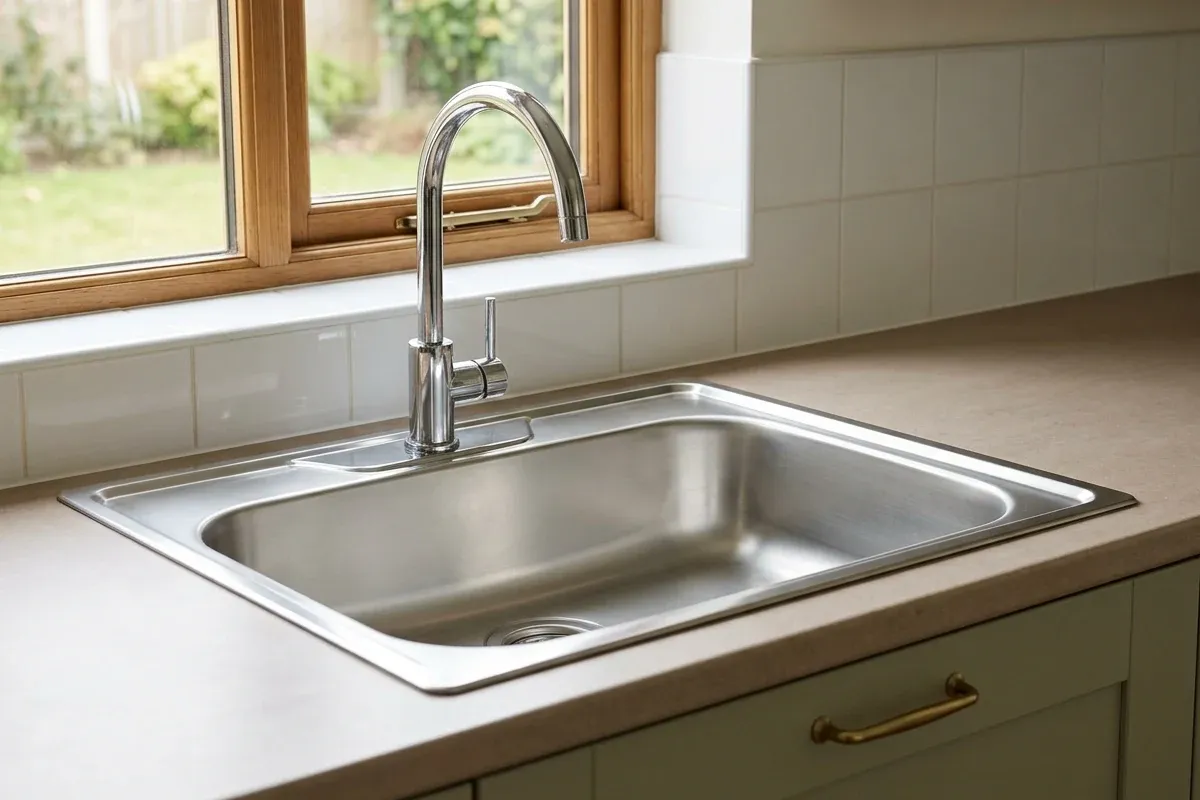
Decide what you want to change at the sink before choosing a new fixture. Do you want a different way to direct the water, room for a particular pan, a different bowl arrangement or simply another finish? Those requests can lead to very different projects.
Compare a faucet-only change with a sink change, then consider replacing both if that serves your goal. Keeping a fixture you like belongs in the comparison too. The useful upgrade is the one that addresses the task without leaving its mounting or plumbing requirements to chance.
Choose the smallest scope that answers your request
| What you want to change | Route to investigate | What that route still needs to establish |
|---|---|---|
| Handle position, spout arrangement or spray control | A faucet change while retaining the sink | Mounting compatibility and whether the proposed controls and spout work in the space |
| The way a pan sits in the bowl | A different sink bowl or configuration | Actual usable bowl space, cutout, cabinet and drainage compatibility |
| A divided washing arrangement | A different bowl layout | Whether the division supports your tasks and accommodates the items you use |
| The appearance of otherwise useful fixtures | A finish or style change to the selected fixture | The exact product, mounting requirements and care instructions |
Treat a leak or damaged component as an assessment question before defining an upgrade. Ask a plumber or the manufacturer what needs attention. This guide helps compare purchase scopes; it does not diagnose a fault or tell you how to repair it.
For example, imagine that you like your sink bowl but dislike the faucet's control position. Start by comparing faucet configurations against the existing sink. Replacing the bowl is a separate proposal that needs its own reason.
If you keep the sink, establish the faucet mounting arrangement
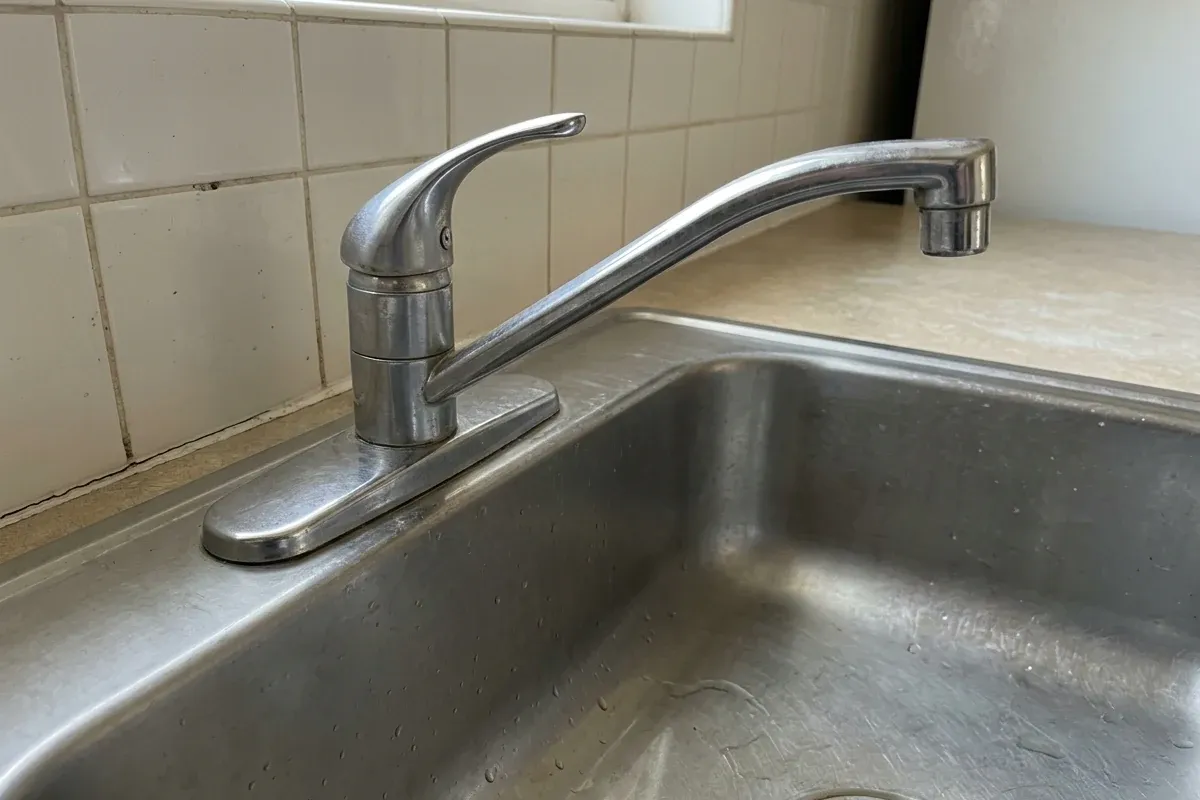
Record where the faucet mounts: through the sink deck or through the countertop. Establish the available holes, including any covered by a plate, without assuming that the visible shape tells you what is underneath. Ask the installer to confirm details you cannot see or identify.
Moen's faucet-selection guidance organizes compatibility around the sink's hole configuration and directs readers to the exact model specification for base-plate options. Hole count starts the check; it does not settle every part of the installation. Moen kitchen faucet compatibility guide.
Ask the supplier to confirm:
- Which holes the faucet and any selected accessories will use.
- The required hole dimensions and spacing for that model.
- Whether a base plate is required, optional or unsuitable for the arrangement.
- The mounting thickness the faucet is designed to accommodate.
- The connection and under-sink space requirements in its instructions.
As an example of the information to look for, Moen's Arbor 7594-series specification distinguishes mounting-hole arrangements and states a maximum deck thickness. It also identifies more than one version of the series. That document is a reason to match the version and mounting details, not proof that a 7594 faucet fits your sink. Moen 7594-series specification.
Do not accept “fits most sinks” as the answer to a specific mounting question. Have the actual proposed combination checked.
Compare the spout and controls with your task
Look at the manufacturer's drawing from the side as well as above. Mark the proposed faucet position relative to the bowl, backsplash and any window or shelf behind it. Ask how the handle moves through its operating range and where the spout would sit over the bowl.
For a pull-down or pull-out option, ask to see the hose-routing requirements for that exact model. Include the area below the sink in the conversation, not only the visible spout.
Use one familiar task to compare candidates. If you want to fill a stockpot, record where you intend to place it and whether the proposed arrangement accommodates that position. If directing water around the bowl is your priority, compare the documented spout or spray configuration with that task. Do not assume a taller faucet automatically answers either request.
A hypothetical comparison might read: “Option A puts the control where I prefer, but the backsplash clearance is unconfirmed. Option B has a confirmed control arrangement, but I still need to assess the spout position.” Neither becomes the choice solely because it looks more compact in a photo.
If you change the sink, compare more than its outer size
Separate the sink's outside dimensions, the bowl's interior and the required countertop cutout. Identify the mounting method and the cabinet requirements before deciding that a new sink can replace the old one.
Moen distinguishes drop-in sinks, with a visible rim over the countertop, from undermount sinks attached beneath it. Its selection guidance also asks buyers to consider the existing opening's shape and dimensions. A style label alone is not a replacement specification. Moen sink mounting and selection guide.
Compare bowl arrangements with the same cookware. Sketch where your largest regularly washed item would sit and how you would use the rest of the bowl. If you prefer separate areas for different tasks, include that preference. If the divider is what frustrates you, investigate a single-bowl arrangement without assuming every single bowl will accommodate the item.
Keep depth tied to an actual task. Ask the installer to assess what the proposed sink and drain arrangement mean below the counter. Do not choose a deeper bowl on the assumption that the existing plumbing and storage will remain as they are.
Some sink specifications make this distinction particularly clear. Moen's FC301810 fireclay sink document requires cabinet support and says to use the actual sink when determining the cutout because dimensions can vary. These are requirements for that documented model, not instructions to build a support frame yourself or evidence that it fits an existing cabinet. Moen FC301810 specification.
If the proposal changes the sink cabinet, use planning small kitchen cabinets to define that work separately from the fixture purchase.
Have the whole sink area checked as one arrangement
Send the proposed sink and faucet documents to the installer together, even if you are replacing only one fixture. Include the retained fixture's details and photographs of the area above and below the counter.
Kohler's installation guide for its listed self-rimming cast-iron sinks calls for checking clearance among the sink, faucet, backsplash and cabinet, as well as the relationship between mounting thickness and the faucet's threaded shank. The selection lesson is to check the assembly, not approve each item in isolation. Kohler sink installation guide, preparation section.
Have a qualified plumber assess the proposed supply and drain connections, the existing components that can be retained and any applicable local requirements. Where countertop or cabinet work is involved, ask who will coordinate it. Moen's FC301810 installation instructions specifically call for coordination among the relevant trades and recommend trained, experienced installers for undercounter work. Moen fireclay sink installation guide.
If a dishwasher uses the faucet or shares connections in this area, identify that arrangement before selecting new fixtures. Ask for its compatibility to be checked against the dishwasher's own instructions as well.
Compare complete scopes before comparing offers
Use the same improvement goal for both proposals. One might retain the sink and change the faucet; another might change both. Make the additional work and the additional benefit visible.
| Proposal field | Option A | Option B |
|---|---|---|
| Task or appearance change requested | Describe the requested change. | Describe the requested change. |
| Sink and faucet retained or replaced | Identify retained and replacement fixtures. | Identify retained and replacement fixtures. |
| Exact models, versions and mounting documents | Record the models, versions, and documents. | Record the models, versions, and documents. |
| Hole arrangement and mounting thickness confirmed by | Name who confirmed the mounting details. | Name who confirmed the mounting details. |
| Bowl, cutout and cabinet fit confirmed by | Name who confirmed bowl, cutout, and cabinet fit. | Name who confirmed bowl, cutout, and cabinet fit. |
| Plumbing and other connected equipment assessed by | Name who assessed connections and equipment. | Name who assessed connections and equipment. |
| Countertop/cabinet work included or excluded | Record included and excluded work. | Record included and excluded work. |
| Installation, removal and making-good scope | Describe installation, removal, and making good. | Describe installation, removal, and making good. |
| Care instructions for the selected finish/material | Record the applicable care instructions. | Record the applicable care instructions. |
| Dated complete offer and unanswered questions | Record the dated offer and open questions. | Record the dated offer and open questions. |
Keep an unknown line marked unknown. A fixture price alone is not the total for a proposal that includes other work. This guide supplies no cost estimate or promise about which route is cheaper.
Use budget small kitchen makeover planning to weigh the complete scope against your other priorities.
If the fixture decision is part of choosing several appliances and connections together, return to choosing appliances for a small kitchen with the confirmed sink-area requirements.
Choose the proposal that addresses your stated task with a confirmed arrangement and an acceptable scope. Retaining the sink is a valid outcome; a larger project should have a clear reason beyond replacing more parts.